chessgames.com

Fine 
 
Reuben Fine
Number of games in database: 381
Years covered: 1930 to 1986
Overall record: +174 -57 =119 (66.7%)*
   * Overall winning percentage = (wins+draws/2) / total games
      Based on games in the database; may be incomplete.
      31 exhibition games, odds games, etc. are excluded from this statistic.

MOST PLAYED OPENINGS
With the White pieces:
 Nimzo Indian (21) 
    E33 E37 E43 E34 E32
 Queen's Gambit Declined (21) 
    D37 D30 D35 D39 D31
 Orthodox Defense (18) 
    D55 D63 D51 D60 D62
 Grunfeld (16) 
    D81 D83 D82 D75 D73
 Ruy Lopez (12) 
    C86 C70 C83 C61 C72
 Queen's Pawn Game (11) 
    D02 E00 A40 D04 A50
With the Black pieces:
 Nimzo Indian (25) 
    E33 E43 E34 E45 E23
 Queen's Gambit Declined (16) 
    D38 D30 D37 D39
 Orthodox Defense (15) 
    D51 D68 D50 D64 D61
 Ruy Lopez (14) 
    C83 C71 C74 C73 C86
 Queen's Pawn Game (13) 
    D02 A46 D04 E10
 French Defense (10) 
    C01 C18 C05 C14 C02
Repertoire Explorer

NOTABLE GAMES: [what is this?]
   Capablanca vs Fine, 1931 0-1
   Fine vs Lasker, 1936 1-0
   Fine vs Botvinnik, 1938 1-0
   I A Horowitz vs Fine, 1934 0-1
   Fine vs W Winter, 1936 1-0
   Fine vs Flohr, 1938 1-0
   Fine vs Alekhine, 1938 1-0
   Reshevsky vs Fine, 1941 1/2-1/2
   Fine vs G A Thomas, 1935 1-0
   Capablanca vs Fine, 1938 1/2-1/2

GAME COLLECTIONS: [what is this?]
   Fine by Morten
   Reuben Fine's Best Games by woodenbishop
   Nottingham 1936 by Hesam7
   AVRO 1938 by Benzol
   Semmering/Baden 1937 by suenteus po 147
   Syracuse 1934 by Phony Benoni
   Zandvoort 1936 by suenteus po 147
   Reuben Fine by capybara
   Hastings 1937/38 by sneaky pete
   Margate 1937 by suenteus po 147

Search Sacrifice Explorer for Reuben Fine
Search Google® for Reuben Fine


REUBEN FINE
(born Oct-11-1914, died Mar-26-1993) United States of America

[what is this?]
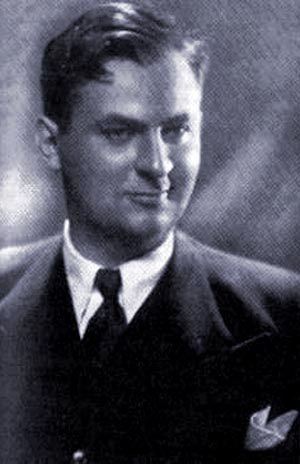
Reuben Fine was born in 1914. He grew up in New York City and first learned to play chess at the age of eight. After winning several strong American tournaments as a youth, Fine turned to international competition. In 1937 he tied with Paul Keres for first at Margate, and at the AVRO tournament the next year he again finished tied for first with Keres.

After World War II, he was offered an invitation to the World Championship tournament in 1948, but declined to participate. He retired from chess a few years later in order to pursue a career in psychology. In his foreshortened career, Fine played against five world champions. He had overall plus scores against three of them (Emanuel Lasker, Alexander Alekhine, and Mikhail Botvinnik) and even records against the other two, Jose Raul Capablanca and Max Euwe.

He was an author of note, his most recognized works were: Ideas Behind the Chess Openings and Basic Chess Endings.


 page 1 of 16; games 1-25 of 381  PGN Download
Game  ResultMoves Year Event/LocaleOpening
1. Dake vs Fine 1-035 1930 young mastersB24 Sicilian, Closed
2. Fine vs J Rappaport 1-028 1931 USA Intercollegiate ch -32, USAA00 Uncommon Opening
3. Capablanca vs Fine 0-148 1931 New York SimultaneousD51 Queen's Gambit Declined
4. Fine vs Dake 0-117 1931 New York, USAE43 Nimzo-Indian, Fischer Variation
5. Fine vs H Steiner  1-037 1932 New York m, USAE41 Nimzo-Indian
6. Fine vs H Steiner 0-129 1932 Pasadena (USA)D67 Queen's Gambit Declined, Orthodox Defense, Bd3 line
7. H Steiner vs Fine  1-040 1932 New York m, USAC49 Four Knights
8. H Steiner vs Fine  ½-½75 1932 New York m, USAE11 Bogo-Indian Defense
9. Fine vs H Steiner  ½-½58 1932 New York m, USAA15 English
10. Fine vs A J Fink 1-030 1932 Pasadena (USA)A00 Uncommon Opening
11. Fine vs H Steiner  1-038 1932 New York m, USAE34 Nimzo-Indian, Classical, Noa Variation
12. H Steiner vs Fine  1-061 1932 New York, USAD90 Grunfeld
13. Alekhine vs Fine  ½-½57 1932 PasadenaB02 Alekhine's Defense
14. H Steiner vs Fine  0-165 1932 New York m, USAB03 Alekhine's Defense
15. Fine vs Levenstein  1-063 1932 Ch Marshall Chess Club, New York (USA)A53 Old Indian
16. H Steiner vs Fine 0-128 1932 New York m, USAD90 Grunfeld
17. Fine vs A Simonson 1-022 1932 New York Marshall CC ch -33, USAA00 Uncommon Opening
18. H Borochow vs Fine 1-011 1932 Pasadena USA ch, USAB02 Alekhine's Defense
19. Fine vs Factor  1-054 1932 MinnepolisE00 Queen's Pawn Game
20. Fine vs H Steiner 0-131 1932 New York m, USAD35 Queen's Gambit Declined
21. Fine vs Kevitz 1-032 1932 New York, USAE10 Queen's Pawn Game
22. Fine vs H Steiner  0-137 1932 New York m, USAA09 Reti Opening
23. J Enevoldsen vs Fine  ½-½37 1933 Folkestone olm, ENGD90 Grunfeld
24. Levenstein vs Fine  1-032 1933 ?E18 Queen's Indian, Old Main line, 7.Nc3
25. Dake vs Fine 1-042 1933 New York, USAA21 English
 page 1 of 16; games 1-25 of 381  PGN Download
  REFINE SEARCH:   White wins (1-0) | Black wins (0-1) | Draws (1/2-1/2) | Fine wins | Fine loses  
 

Kibitzer's Corner
< Earlier Kibitzing  · PAGE 7 OF 7 ·  Later Kibitzing >
Oct-11-07   Morten: Tamar,

Thank you for that reference. I don't have that volume and had only looked in the ones with Capablanca/Alekhine and Botvinnik/Smyslov. Not that it makes any difference, but I am happy to see that evaluation.

I guess Fine is the type of player for whom you'll always wonder what might have been.

Oct-11-07
Premium Chessgames Member
  tamar: <Morten> I think Kasparov originally was going to leave out the Western players, but was prevailed upon by Timman, and other reviewers who noted the absence,to correct the omission.

As such, it is hard to know Kasparov's true opinion of these players, but his initial rejection of them in the earlier books-choosing to highlight Geller, Polugaevsky and Keres-makes me think he sees them as lower grade.

As a makeshift solution, he lumped them all together in the start of the Fischer volume, highlighting Reshevsky, Najdorf, and Larsen, but giving Fine the biggest mini-section.

Oct-12-07   Morten: Tamar, Good insight. Although Fine at the time wrote "the book" on both openings and endings, when annotating games (his own) he comes across as perhaps less "scientific" than the Soviet monsters that formed Kasparov. Perhaps a myth was formed in the minds of the young Soviet players - a myth which also encompassed Fischer (who was never a favourite player of mine).
Oct-12-07   pazzed paun: In the early 1930's Fine toured Russia and played in a Moscow tournament. He wrote flatteringly of the young Soviet players but he was never thought of as a rival to Botvinnik. Reshevsky was considerd a top rival to Botvinnik and was probably spoken about disparginly by the Soviet Machine.
Oct-13-07   jackpawn: I guess I have to response, even though I stated in my post that my feeling was just an opinion.

It was asked the source of my 'research'. Okay, fair enough. I have always had an interest in the careers of Fine and Reshevsky, particularly the time period before the war, the last period before the Soviets basically took over chess for a generation. I studied Fine's, Reshevsky's, and Botvinnik's games and books. By the late 1930's they all were increasing in strength. Alekhine was obviously declining, at least somewhat. Fine stated in his book that he felt he could have won a match against Alekhine, and felt Botvinnik and Reshevsky could have too. How was he justified in saying this? Well, he won the last three games he played against Alekhine! My final point is to look at the Sonas Chessmetrics ratings. In the absence of ELO ratings back then it's the most objective measure we have. In the period of 1939-41 (a time when any possible match would have taken place) Fine and Botvinnik are always rated number one or two in the world. Generally Botvinnik at the top spot, but several months it was Fine.

So that's my 'research'. You may disagree with my opinion, okay fine. But I think anyone can understand how I came to my opinion.

One final point, my comment was that I thought Fine would beat Alekhine. My comment wasn't to say I thought Fine was the best player in the world. For whatever reason, as <Shams> pointed out, Fine simply couldn't play against Reshevsky. I think Reshevsky was simply a greater fighter. I also question if Fine could have won against Botvinnik.

Oct-13-07
Premium Chessgames Member
  Shams: interesting, <jackpawn>, thanks for sharing. do you have a game collection for Fine?
Oct-20-07   Fatos: He looks like Elvis Presley :P
Oct-20-07   Petrosianic: In the 1930's, maybe. In the 1980's he looked like Isaac Asimov.
Oct-23-07   savagerules: Wonder if he was related to Larry Fine of the Three Stooges fame.
Nov-20-07   CapAnson: <savagerules> Both were Jewish, though Larry Fine's real name was Fineberg, I don't think that's the case with Reuben. Also Reuben was born in New York and was a Russian Jew. Larry was born in Philiadelphia and I don't *think* was Russian. In short if they were related, it was probably distantly.
Jan-03-08
Premium Chessgames Member
  talisman: Mmmmm...Fine had a + score against Lasker, Capablanca, Alekhine, and Botvinnik....and he drew against Euwe. .....Not Bad!.
Jan-03-08
Premium Chessgames Member
  ketchuplover: I have an even score against all world champions except for Anand(-1)
Jan-03-08
Premium Chessgames Member
  Shams: <ketchuplover> post the game!

we should have a game collection: Chessgames Users Play the Pros!

Feb-14-08   MichAdams: According to the <cg.com> DB, Fine's most difficult opponent was Arthur William Dake, (+1 -6 =3). However, only two games (wins for Dake) from their 1933 match in New York, won by Fine +5 -3 =2, are included. Adding in a couple of other omissions, and a more complete overall score stands at +8 -7 =5 in Dake's favour.
Apr-06-08   MichAdams: <In 1945, the remarkable Reuben Fine played four simultaneous blindfold rapid-transit games (at ten seconds per move!!) and won every one of them! The magnitude of this accomplishment is still a wonderful memory to those who were privileged to observe it.> -- The Complete Book of Chess, Horowitz & Rothenberg.

Fine vs R Byrne, 1945
Fine vs B Helander, 1945
Fine vs A Fomin, 1945
Fine vs Epstein, 1945

May-26-08
Premium Chessgames Member
  Karpova: <Dr. Fine wrote of his own eclectic style: "From other masters I try to learn as well, of course. From Capablanca I try to absorb the virtue of simplicity; from Alekhine the speedy way to win a won game; from Rubinstein the supreme art of end-game play; from Nimzovich, how to be unorthodox." He went on, "My chief objective was always precision, wherever that would take me.">

Exceprt from http://query.nytimes.com/gst/fullpa...

Jul-30-08
Premium Chessgames Member
  whiteshark: Quote of the Day

<Discovered check is the dive-bomber of the chessboard.>

-- Fine

Sep-07-08   GrahamClayton: From mid-1936 Fine made a tour of Europe that lasted 19 months. Fine played in 13 tournaments, winning 8, played a match against Gideon Stahlberg (+4, =2, -2), represented the United States at the 1937 Stockholm Olympiad, was Max Euwe's second during Euwe's world championship match against Alekhine, gave numerous displays, had an operation for appendicitis, and finally, found a Dutch bride!

Source: David Hooper and Kenneth Whyld, "Oxford Companion to Chess", 2nd edition, OUP, 1992

Sep-07-08   Paraconti: What I don't understand is why he would give up top-level chess when he had the chance to play for the highest honors, and later conveniently suggest he and Keres were CO-CHAMPS during the interim priod 1946-48 when the crown was vacant!
Sep-07-08   Albertan: Paraconti, Fine gave up chess because:

"In those days there was no money in chess. Dr. Fine had a family to support, and traveling around the world hustling for a few dollars, playing simultaneous exhibitions, writing chess books and annotating games for magazines was a precarious existence indeed. Then in 1939 came World War II, and for almost a decade international chess came to a halt. So Dr. Fine changed course, earning a doctorate in psychology from the University of Southern California in 1941 and setting up a successful practice as a lay analyst." (source:http://query.nytimes.com/gst/fullpa...)

Sep-07-08   Paraconti: I never questioned his reasons for giving up competitve chess. I questioned his moral right to suggest he was a champ when he clearly lacked the drive and commitment to become one.
Sep-07-08   RookFile: <Paraconti: I never questioned his reasons for giving up competitve chess. I questioned his moral right to suggest he was a champ when he clearly lacked the drive and commitment to become one. >

I actually don't agree with Fine either. Nevertheless, let me play devil's advocate, for just a moment. As we know, the AVRO tournament was held to find a challenger to Alekhine. (Although Reshevsky in his book says that Alekhine hedged on that as the tournament was starting). Keres and Fine tied for first.

Here's the thing. When Alekhine died, for some reason, it was decided that <another> tournament needed to be run to declare a new world champion. Apparently, the 'wrong' guys had tied for first in the previous tournament. Fine didn't agree with this opinion. At a minimum, Fine thought that a match between himself and Keres could have been held to declare the world champion, going forward.

As I said, I don't happen to agree with Fine, but his position isn't totally crazy. Can you imagine how Keres thought - he had won the right to play for a world championship match, but never ended up playing it? (Don't say that this right was granted by the 1948 tournament - not when Reshevsky is in there too - when viewed in this way, Keres enjoyed no advantage over Reshevsky in 1948)

Sep-07-08
Premium Chessgames Member
  norami: Probably the greatest American chessplayer not to go insane.
Sep-07-08
Premium Chessgames Member
  Red October: probably coz he was a Psychoanalyst ?
Sep-07-08
Premium Chessgames Member
  norami: Actually, come to think of it, some of the things he wrote in "Psychology of the Chessplayer" were pretty crazy.
Jump directly to page #   (enter number from 1 to 7)
< Earlier Kibitzing  · PAGE 7 OF 7 ·  Later Kibitzing >
NOTE: You need to pick a username and password to post a reply. Getting your account takes less than a minute, totally anonymous, and 100% free--plus, it entitles you to features otherwise unavailable. Pick your username now and join the chessgames community!
If you already have an account, you should login now.
Please observe our posting guidelines:
  1. No obscene, racist, sexist, or profane language.
  2. No spamming, advertising, or duplicating posts.
  3. No personal attacks against other users.
  4. Nothing in violation of United States law.
Blow the Whistle See something which violates our rules? Blow the whistle and inform an administrator.


NOTE: Keep all discussion on the topic of this page. This forum is for this specific player and nothing else. If you want to discuss chess in general, or this site, you might try the Kibitzer's Café.
Messages posted by Chessgames members do not necessarily represent the views of Chessgames.com, its employees, or sponsors.
Spot an error? Please suggest your correction and help us keep the database squeaky clean!


home | about | login | logout | F.A.Q. | your profile | preferences | Premium Membership | Kibitzer's Café | new kibitzing | chessforums | new games | Player Directory | Opening Explorer | Guess the Move | Game Collections | ChessBookie Game | Chessgames Challenge | Little ChessPartner | privacy notice | contact us
Copyright 2001-2008, Chessgames.com
Web design & database development by 20/20 Technologies