chessgames.com

Morphy 
 
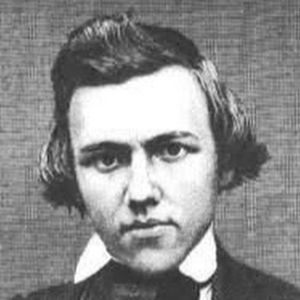
Paul Morphy
Number of games in database: 404
Years covered: 1848 to 1869
Overall record: +200 -24 =26 (85.2%)*
   * Overall winning percentage = (wins+draws/2) / total games
      Based on games in the database; may be incomplete.
      154 exhibition games, odds games, etc. are excluded from this statistic.

MOST PLAYED OPENINGS
With the White pieces:
 Evans Gambit (45) 
    C51 C52
 King's Gambit Accepted (27) 
    C37 C39 C38 C35 C33
 Philidor's Defense (14) 
    C41
 Sicilian (14) 
    B44 B40 B21 B20
 King's Pawn Game (13) 
    C44 C40 C20
 King's Gambit Declined (12) 
    C30 C31
With the Black pieces:
 King's Gambit Accepted (21) 
    C33 C39 C38
 Evans Gambit (15) 
    C51 C52
 Ruy Lopez (14) 
    C77 C65 C60 C78 C64
 Giuoco Piano (9) 
    C53 C50 C54
 Philidor's Defense (7) 
    C41
 King's Pawn Game (5) 
    C44
Repertoire Explorer

NOTABLE GAMES: [what is this?]
   Morphy vs Duke Karl / Count Isouard, 1858 1-0
   Paulsen vs Morphy, 1857 0-1
   Morphy vs Le Carpentier, 1849 1-0
   Bird vs Morphy, 1858 0-1
   Morphy vs Schrufer, 1859 1-0
   Morphy vs Anderssen, 1858 1-0
   Morphy vs A Morphy, 1850 1-0
   J Schulten vs Morphy, 1857 0-1
   N Marache vs Morphy, 1857 0-1
   Morphy vs Anderssen, 1858 1-0

GAME COLLECTIONS: [what is this?]
   Paul Morphy -The Great Chess Genius by Timothy Glenn Forney
   Morphy Favorites by chocobonbon
   paul morphy best games by brager
   If chess was a religion, Morphy would be God. by Chopin
   Odds games #2 by WhiteRook48
   Match Morphy! by amadeus
   Paul Morphy: A Modern Perspective by Avalon Landing
   morpstau's favorite games by morpstau
   Paul Morphy's Best Games by KingG
   Odds games by WhiteRook48
   Morphy Chess Masterpieces by nuts
   Shibut's Morphy games by crawfb5
   Kings Gambit by Nodreads
   Blunder Check: Paul Morphy by nimh

GAMES ANNOTATED BY MORPHY: [what is this?]
   La Bourdonnais vs McDonnell, 1834
   La Bourdonnais vs McDonnell, 1834
   McDonnell vs La Bourdonnais, 1834
   La Bourdonnais vs McDonnell, 1834
   La Bourdonnais vs McDonnell, 1834
   >> 31 GAMES ANNOTATED BY MORPHY

Search Sacrifice Explorer for Paul Morphy
Search Google® for Paul Morphy


PAUL MORPHY
(born Jun-22-1837, died Jul-10-1884) United States of America

[what is this?]
Paul Charles Morphy was born on June 22, 1837 in New Orleans. He was the son of a successful lawyer and judge Alonzo Morphy. His uncle, Ernest Morphy, claims that no one formally taught Morphy how to play chess, but rather that he learned the rules by observing games between himself and Alonzo. When Morphy was only 12 years old, Johann Jacob Loewenthal visited New Orleans and at the behest of his father, agreed to play a casual match with the prodigy. Young Paul won 2½ to ½.

In 1857 Morphy won the First American Chess Congress with a dominating performance. This success was followed by a European trip where he met and triumphed over most of the prominent masters of the period, including Adolf Anderssen whom he defeated +7 -2 =2. Upon returning to America, he announced his retirement from chess.

Although the official title of World Champion did not exist in his time, Morphy was and is widely regarded as the strongest player of his day. Even today his games are studied for their principles of open lines and quick development, and his influence on the modern game is undeniable. Mikhail Botvinnik wrote of his influence: "His mastery of open positions was so vast that little new has been learned about such positions after him."


 page 1 of 17; games 1-25 of 404  PGN Download
Game  ResultMoves Year Event/LocaleOpening
1. Morphy vs A Morphy 1-018 1848 New OrleansC33 King's Gambit Accepted
2. Morphy vs NN 1-019 1848 New OrleansC20 King's Pawn Game
3. Morphy vs A Morphy 1-031 1848 New OrleansC23 Bishop's Opening
4. J McConnell vs Morphy 0-123 1849 New OrleansC38 King's Gambit Accepted
5. Morphy vs E Rousseau 1-023 1849 New OrleansC50 Giuoco Piano
6. Morphy vs J McConnell 1-023 1849 New OrleansC40 King's Knight Opening
7. Morphy vs E Rousseau 1-017 1849 New OrleansC39 King's Gambit Accepted
8. Morphy vs J McConnell 1-029 1849 New OrleansC39 King's Gambit Accepted
9. Morphy vs E Morphy 1-020 1849 New OrleansC53 Giuoco Piano
10. Morphy vs A Morphy 1-021 1849 New Orleans -C51 Evans Gambit
11. Morphy vs J McConnell 1-011 1849 New Orleans cgC35 King's Gambit Accepted, Cunningham
12. Morphy vs Le Carpentier 1-013 1849 New Orleans000 Chess variants
13. Morphy vs A Morphy 1-046 1849 New OrleansC51 Evans Gambit
14. Morphy vs NN 1-020 1849 New Orleans cgC39 King's Gambit Accepted
15. Morphy vs A Morphy 1-015 1849 New Orleans mC51 Evans Gambit
16. Morphy vs E Morphy 1-025 1850 New OrleansC52 Evans Gambit
17. J McConnell vs Morphy 0-114 1850 New OrleansC02 French, Advance
18. Morphy vs NN 1-014 1850 casualC44 King's Pawn Game
19. J McConnell vs Morphy 0-125 1850 New OrleanC52 Evans Gambit
20. Morphy vs NN 1-018 1850 ?000 Chess variants
21. Morphy vs Lowenthal 1-049 1850 New OrleansB21 Sicilian, 2.f4 and 2.d4
22. Morphy vs A Morphy 1-018 1850 New Orleans ?000 Chess variants
23. Morphy vs Lowenthal 1-055 1850 New OrleansC42 Petrov Defense
24. Maurian vs Morphy 1-029 1854 New Orleans000 Chess variants
25. Morphy vs Maurian 0-127 1854 New Orleans000 Chess variants
 page 1 of 17; games 1-25 of 404  PGN Download
  REFINE SEARCH:   White wins (1-0) | Black wins (0-1) | Draws (1/2-1/2) | Morphy wins | Morphy loses  
 

Kibitzer's Corner
< Earlier Kibitzing  · PAGE 229 OF 229 ·  Later Kibitzing >
Aug-22-09
Premium Chessgames Member
  scrambler: <A child of 4 years old has a brain especially well-adapted to learning multiple languages. Apparently, the language areas are still very 'plastic' and easily form new synapses and connections. Perhaps some rare kid may have the brain that allows him to treat chess as a language.> yeah! something like that.

Capa himself said that his father moved a knight from a white square to another white square (I forget the actual color) so clearly the child is watching the game and making some kind of connection to the pieces and how they move.

If a four to six-year olds brain could learn chess like ones learns a language, the pawn structure could be like a the sentence structure to them and the pieces the punctuation marks, then like language, it just a matter of using it enough to become proficient at it.

In your references to Capablanca, who we see playing openings with Benoni structures with stunning accuracy first time around, he appeared to position the pieces exactly where they were needed like punctuation marks if you will.

He did the same with the French defense he played against Corzo, 1 e4 e6 2.d4 d5 3.Nc3 de4 4.Ne4, and now Capa played 4.Bd7 intending 5.Bc6. I can't seem to find any games older then his using the ChessBase database.

In both cases I don't know if he actual saw a game with these strategies and improved them,or what either way it's amazing!

Aug-22-09   visayanbraindoctor: <scrambler> My little research on the Modern Benoni is summarized here: Benoni (A61)

<A child of 4 years old has a brain especially well-adapted to learning multiple languages. Apparently, the language areas are still very 'plastic' and easily form new synapses and connections. Perhaps some rare kid may have the brain that allows him to treat chess as a language.>

If there is any truth to this, then Morphy and Capablanca were to a large extent products of fortune and serendipity. The best age for a child to learn languages is at around 2 to 6 years old. At this age, a child can learn the most difficult languages in the world without effort. It's as natural as learning how to stand, walk, and run. If Morphy and Capa first saw their fathers playing chess at say age 8 to 10, they may never have learned chess as a first <language>, and may not have been as strong in chess. If they were in Europe, they may well still have become known masters, but given their location in the Americas, they probably would have ended up being solely a lawyer or a mathematician, or in some other field from which we as chess fans would never have heard of them.

Chess of course is not a natural language; which is <why didn't it happen to Morphy and Capablanca's brothers and sisters>. From this point of view, the vagaries of fortune just so happened that the <rare kids> with the rare but proper kind of chess brain got exposed to chess at the age when they were learning their first languages.

Sep-12-09   kooley782: <Knight13> I think you are missing the fact that Morphy's style is based on rapid development and good piece placement. He prefers open lines for his pieces, positioning them in such a way as to build advantages which lead to those "impossible-to-see" combinations. Sure, he is an excellent attacker, but his outwardly aggressive play hides deep positional understanding.

<SatteliteDan> Positional play is putting pieces on good squares, creating weaknesses in your opponent's position while keeping yours free of weaknesses, and not necessarily as much rushing forward as building off of tiny advantages and converting them into wins. The endgame is probably one of the places you see positional play used most. Often an endgame's final result is based on how well a piece is placed or a player's control of an open line.

Sep-12-09   kooley782: Ah, sorry about my previous comment, everyone. To see the questions and statements I was answering, go to page 212. I somehow ended up there thinking it was the latest kibitzing.
Sep-17-09   James Demery: Is Morphy`s loss to the Queen of England in this database?
Sep-18-09   Phorqt: <visayanbraindoctor & scrambler>

You bring up some thought-provoking points here.

I had a math teacher at Iowa State who was also a linguist of sorts, and he explained that math was a language. I think he defined a language as a series of symbols used to convey complex meaning (or something like that) and I must admit I agree with his insights.

That said, I am not prepared to accept that chess is a language per se unless perhaps in it's most rudimentary form.

One could easily and, I think successfully, argue that chess is a means of communication, but the information being conveyed is of an extremely limited nature and my gut tells me it's not a language because of this.

If chess does not indeed meet the criteria for being considered a language (and we can talk about that if you wish), it clearly shares certain similarities to languages as you both point out in terms of it's structure.

<If there is any truth to this, then Morphy and Capablanca were to a large extent products of fortune and serendipity>

Now as far as this goes, what would this say about a player like Pillsbury, who only learned the moves when he was in his teens?

Would you argue that Pillsbury was more gifted than Capa and Morphy?

Sep-21-09   visayanbraindoctor: <Phorqt: I had a math teacher at Iowa State who was also a linguist of sorts, and he explained that math was a language.> From everything I have read, that's right.

<I am not prepared to accept that chess is a language per se>

And I agree. However, since playing chess to a large extent consists of logical pattern recognition, and perhaps so does speaking a language, I am wondering if the same areas of the brain can process both chess and language.

If chess is a real language, then the siblings of Capablanca and Morphy would have learned it too, just by watching their fathers play. Young children will learn any language that they are exposed to. Capablanca and Morphy simply had the brains to do it, which their siblings, and probably 99.99% of the human population does not have.

<Would you argue that Pillsbury was more gifted than Capa and Morphy?>

Perhaps if the obviously talented Pillsbury learned chess by watching his father play at the age of 4, he could have reached the heights of a Capablanca.

Perhaps if Capa had learned chess as a teenager, he may have become an Almost World Champion like Pillsbury, but never a World Champion. (We will never know though.)

Sep-21-09   Ziggurat: Reti wrote something to the effect that although Rubinstein and Capablanca were roughly equal in "raw strength", Capa had the edge because he blundered less. Reti explained that by positing that for Capa, chess was like a "mother tongue", while Akiba had to painstakingly learn it as an adult. (He was a late bloomer.)
Sep-21-09
Premium Chessgames Member
  scrambler: <Phorqt,> Pillsbury, like Morphy, like Fischer, an American Chess tragedy, he is my 3rd favorite player behind Morphy and Capablanca.

I agree with <visayanbraindoctor> that the age of the <"right kind of brain's"> exposure to chess can affect the how strong that chessplayer will become.

I said earlier Pillsbury and Morphy could remember pages of material after scanning it once. This kind of memory power gives one and enormous advantage in chess. Combine this with a natural ability to play and you have a player with computer like capabilities.

Now this is just my take, Pillsbury learned chess late, but had a phenomenal memory and he was a disciplined analyst, he said he "evolved" his own moves.

Did chess come to him naturally, I don't think so, as result of his late learning, he had to analyze chess, something he admits to. I can't imagine Morphy or Capablanca preparing variations against future opponents the way Pillsbury did. Note his playing of the QGD and his attacking formation, and his favorite 3...g6 variation in the Ruy Lopez.

Capablanca and Morphy played with natural ability and dealt with the positions that developed in real time. I often wonder if Pillsbury could have survived the Marshall gambit in the Ruy Lopez if it was sprung on him, my take is not the first time around.

Had Pillsbury learned chess during the time the brain learns a language with relative ease instead of years later, then perhaps HE would have been know as the "chess machine"

The effect Pillsbury's 1899 Havana simultaneous display had on a 10 or 11 year old Capablanca:

<'I was then a very mediocre player, but the reader can well imagine the impression on a child full of imagination produced by a man who could play simultaneously sixteen or more blindfold games of chess at the same time that he played a number of blindfold games of draughts [checkers] and a hand of duplicate whist. The effect of Pillsbury's displays was immediate. They electrified me, and with the consent of my parents,I began to visit the Havana Chess Club. By leaps and bounds I reached the top class in three months, and I was not over twelve when I defeated the champion of Cuba in a set match....'">

Pillsbury's blindfold performance compared to one of Alekhines, supposedly written by a person who saw both these great players in action:

<He played strong chess and made no mistakes [presumably in recalling the positions]. The picture of Pillsbury sitting calmly in an armchair, with his back to the players, smoking one cigar after another, and replying to his opponents' moves after brief consideration in a clear, unhesitating manner, came back to my mind 30 years later, when I refereed Alekhine's world record performance at the Chicago World's Fair, where he played 32 blindfold games simultaneously. It was quite an astounding demonstration, but Alekhine made quite a number of mistakes, and his performance did not impress me half as much as Pillsbury's in Breslau.>

Sep-21-09   visayanbraindoctor: <scrambler: I often wonder if Pillsbury could have survived the Marshall gambit in the Ruy Lopez if it was sprung on him, my take is not the first time around.>

I agree. Even without Marshall springing the Marshall Attack on him, Pillsbury had great difficulties in handling Marshall's highly tactical style. I think Marshall is one of the less than a handful of masters with a plus score against Pillsbury. Pillsbury also met his jinx in Blackburne, another mainly tactical player. Honestly, I think that if it were Pillsbury on the receiving end of the novel Marshall attack by Marshall himself, instead of Capablanca, Pillsbury in all likelihood would have gone down in flames, even if I think he is one of the greatest players of history and should have been World Champion.

<Did chess come to him naturally, I don't think so, as result of his late learning, he had to analyze chess, something he admits to.>

I agree. It's the same case with Rubinstein, and for that matter I think with Korchnoi as well. All these Almost World Champions learned chess late. They probably had to do a lot of over the board analysis as you say using the <I move this, he moves that> method, mentally crunching out variations step by step, while keeping a clear mental visualization of the chess pieces on the chess board. In effect, this is like playing blindfold chess, as you visualize in your mind's eye as many positions as possible from any given position that is actually on the chess board, step by step.

Pillsbury's photographic memory and visualization gave him a huge advantage in this. He could see clearly in his mind's eye numerous possible positions as though they were on an actual chessboard.

Capablanca on the other hand probably almost always saw positions automatically flashing in and out of his mind's eye very rapidly whenever he was presented with any given position. From all accounts, his colleagues could not believe how fast Capa could play in complicated positions without committing a single error. Capablanca would surely love present-day time controls of 1.5 hours per 40 moves; he seemed to have consumed just an hour in many of his games, and yet while playing perfectly without errors. In blitz and rapids, Capa was truly invincible and beat the crap out of everyone from Lasker to Fine. Chess was a mother tongue to him. Same with Morphy.

In addition, although Capablanca was not into blindfold chess the way Alekhine was, he was excellent in blindfold chess too if he did play it, for instance as seen in Capablanca vs M Fonaroff, 1918. I have read an article by Capa actually complaining that he remembers all the games he has ever played, as these cluttered up his head, and he was trying to forget all these infernal games replaying themselves in his mind. I think Capa remembered every master game he had ever seen or replayed, which is one reason why he did not have to intensively prepare for openings. Any new opening that he saw got stuck into his memory. And with his unsurpassed chess intuition, he could handle these openings inside out from both sides of the board, playing them perfectly even if the theory for them did not yet exist. (I have made numerous posts on this remarkable ability on the Capablanca page.)

It's unfortunate that Pillsbury did not learn chess at the age of 4. As I have posted, he could very well have been as good as Capablanca, and he would have indeed been the first chess machine.

It is of also sad that Pillsbury never lived to play Rubinstein. The games between these two would have been gems.

Sep-22-09
Premium Chessgames Member
  Boomie: One can take this division of natural vs. anlyzing a bit too far. Both Morphy and Capablanca studied and wrote analysis on games for newspapaers.

Morphy made Game Collection: WCC Index [La Bourdonnais-McDonnell 1834] a special study and we are lucky to have his analysis for some of these great matches. And of course he knew every Staunton game by heart. Capa had to work on Lasker's games to have any chance of challenging the greatest champion of his generation.

Yes it is true that these two were scary gifted. But they also worked hard on their games.

Sep-22-09
Premium Chessgames Member
  scrambler: <Boomie: One can take this division of natural vs. anlyzing a bit too far. Both Morphy and Capablanca studied and wrote analysis on games for newspapaers.>

I try not too, of course they analysed, but not "worked hard" to the extent of say Alekhine, who was well know for analsying even non-master games. Capablanca and Morphy were noted for their natural accurate quick play which is an indicator of natural ability. In chess much like language the deeper the comprehension, the more fluent the person speaking/playing it.

To some especially childern picking up a language is easy, the brain is still developing so there room so to speak that has not been used or even formed yet. A child learning chess or any other activity will have an advantage if they have the right kind of brain. Capablanca and Morphy were natural players more so than Alekhine and Pillsbury, the latter two great analyzing and preparing variations.

A person speaking fluently speaks fast, the same comparison can be found in chess. In Capablanca's case we have a report from Alekhine himself commenting of capa's ability in "quick games"

<His real, incomparable gifts first began to make themselves known at the time of St. Petersburg, 1914, when I too came to know him personally. Neither before nor afterwards have I seen – and I cannot imagine as well – such a flabbergasting quickness of chess comprehension as that possessed by the Capablanca of that epoch.

Enough to say that he gave all the St. Petersburg masters the odds of 5–1 in quick games – and won!>

These are the masters Capablanca allegedly gave 5 to 1 odds to and beat all of them:

Emanuel Lasker
Siegbert Tarrasch
Alexander Alekhine
Frank James Marshall
Ossip Bernstein
Akiba Rubinstein
Aron Nimzowitsch
Joseph Henry Blackburne
Dawid Janowski
Isidor Gunsberg

Now I'm not sure if quick games is the same as blitz chess but I've seen photographs and the clocks they use, they certainly could set a one clock at 5 minutes and the other at 1 minute. Alekhine reports that Capablanca spot them all and won, this tells me that they played even at first and then discovered they couldn't handle Capablanca and started getting time odds.

I play speed chess myself and can tell you tactical players especially the gifted ones are the most dangerous, in the 1914 list we have Alekhine, Blackburne and Marshall all strong tactical players being giving the odds of 5 to 1, and being dispatched in less than 60 seconds, from what it sounds like. I can scarcely believe this even now! I've seen masters give 5 to 1 odds ...not easy, I've never seen one win ALL the games.

My point is they were up against a natural chessplayer and even given extra time to analyse they were no match.

Sep-22-09
Premium Chessgames Member
  scrambler: <visayanbraindoctor> I've been thinking, does chess have the one thing all languages have; the ability to convey emotion.

Is it possible to looked at a chess game or chess itself and like hearing say a melancholy tune caused one to become depressed, and if one cannot escape from that source of depression, cause one to take ones own life. If chess <like love like music has the power to make men happy> then it should just as well have the same power to make men miserable.

I have to think more about this.

Sep-22-09
Premium Chessgames Member
  Boomie: <scrambler>

We don't have to go back in history to find such talent. Anand fits your description well. He learned to play when he was young. He plays wickedly fast and is the best speed player over the last 20 years. Of course he does work pretty hard on his game these days. No amount of talent will take you to the championship today.

Morphy also played very fast in a time before clocks were used. Spectators would time his moves. As far as is known, the longest he took for one move was 12 minutes. That was considered an eon for him.

Sep-22-09
Premium Chessgames Member
  scrambler: I've seen Anand play blitz at Liberty park years ago and yes he's wickedly fast he gave all comers 5 to 1 it was like watching the devil play. I 've never seen Capblanca play so I can't compare. But Anand did lose a few mostly superior positions on time.
Sep-29-09
Premium Chessgames Member
  Boomie: <visayanbraindoctor: Effect of Civil War on Morphy>

The Civil War did not effect Morphy as much as your posts imply. At least it had little influence on his decision to leave chess. He felt that chess was not a proper career for a man from his prominent family. New Orleans survived the war virtually unscathed as it was captured by the Union very early.

<SatelliteDan: Another thought,.. Given the fame that Paul Morphy had. Shouldn't there have been many more quote's fom him?>

There are many Morphy quotes. Plus he wrote a chess column and many of his letters are available.

Anyone interested in Morphyana is urged to visit our very own SBC's Web site. Be forwarned that you will not be able to stop reading this immense archive.

http://batgirl.atspace.com/

Sep-29-09   WiseWizard: <scrambler: I've been thinking, does chess have the one thing all languages have; the ability to convey emotion.> I think conveying temperament is more likely. Emotions tend to get in the way of clear and rational judgement. Chess is objective and demands being cold.
Sep-30-09   visayanbraindoctor: <Boomie> If close relatives or friends got wounded or killed, it must have affected Morphy badly. There seems to be scant documentation of this though. At any rate, I believe that being on the losing end of a civil war, all Louisianians must have been affected badly to varying degrees. I proposed this hypothesis precisely because it seems to be scarcely mentioned in any discussion regarding Morphy's early retirement from chess, and I believe this angle should be.

If Morphy had any predilection for Schizophrenia, a civil war would be a prime candidate for triggering the full-blown disease. (It could have been other factors though, or a combination of them, including the American civil war.)

I do hope American chess fans and chess players organize a Morphy Memorial, overdue by more than a century.

<scrambler, phorqt> I shall post my reply in the Jose Raul Capablanca corner.

Oct-01-09
Premium Chessgames Member
  Boomie: <visayanbraindoctor: <Boomie>>

Morphy was against secession. He left for Europe shortly after the start of the war. His family was shielded by their prominent position in Louisiana society.

Although there were major engagements in Mississippi, Louisiana was spared. The Union was only interested in controlling the river. After the fall of Vicksburg one day after Gettysburg, they achieved this goal. The war in the West was then strategically over. That's one reason Lincoln could bring Grant East.

You should really visit SBC's Morphy site. Everything known about Morphy is in there.

Oct-01-09
Premium Chessgames Member
  Boomie: Here is an interesting story which highlights Morphy's memory.

Concerning Morphy's incredible memory, Falkbeer, in the June 1881 issue of Brentano's Chess Monthly, had this to say:

I was at the time editing the Chess Column of the London Sunday Times and anxious to reproduce them there [the Morphy-Lowenthal match games]. In order to obtain the requisite information, I had to apply to one of the contesting parties [the games were kept as the participants' intellectual property]. I first went to Morphy who received me most cordially, and declared his entire willingness to dictate the last partie, played the day before. I begged him to repeat the game on the board as I would, in this manner, be better able to follow the progress of the contest. Morphy consented and at the 10th move of Black (Lowenthal), I asked him to stop for a moment, since it seemed to me at this particular point, a better move might have been made. "Oh, you probably mean the move you yourself made in one of your contests with Drufresne? answered Morphy in his simple, artless way of speaking. I was startled. The partie mentioned has been played in Berlin in 1851, seven years before and I had totally forgotten all its details. On observing this, Morphy called for a second board and began, without the least hesitation, to repeat the game from the first to the last move without making a single mistake. I was speechless from surprise. Here was a man whose attention was constantly distracted by countless demands on his memory and yet had perfectly retained for seven years all the details of a game insignificant in itself and moreover, printed in a language and description unknown to him. [having been published in the Berliner Schachzeitung, 1851]

Jump directly to page #    (enter number from 1 to 229)
< Earlier Kibitzing  · PAGE 229 OF 229 ·  Later Kibitzing >
NOTE: You need to pick a username and password to post a reply. Getting your account takes less than a minute, totally anonymous, and 100% free--plus, it entitles you to features otherwise unavailable. Pick your username now and join the chessgames community!
If you already have an account, you should login now.
Please observe our posting guidelines:
  1. No obscene, racist, sexist, or profane language.
  2. No spamming, advertising, or duplicating posts.
  3. No personal attacks against other users.
  4. Nothing in violation of United States law.
Blow the Whistle See something which violates our rules? Blow the whistle and inform an administrator.


NOTE: Keep all discussion on the topic of this page. This forum is for this specific player and nothing else. If you want to discuss chess in general, or this site, you might try the Kibitzer's Café.
Messages posted by Chessgames members do not necessarily represent the views of Chessgames.com, its employees, or sponsors.
Spot an error? Please suggest your correction and help us eliminate database mistakes!


home | about | login | logout | F.A.Q. | your profile | preferences | Premium Membership | Kibitzer's Café | new kibitzing | chessforums | new games | Player Directory | World Chess Championships | Opening Explorer | Guess the Move | Game Collections | ChessBookie Game | Chessgames Challenge | Little ChessPartner | privacy notice | contact us
Copyright 2001-2009, Chessgames.com
Web design & database development by 20/20 Technologies